Katerina Akassoglou Receives Zenith Fellows Award to Advance Alzheimer’s Research

The Alzheimer’s Association has selected Gladstone’s Katerina Akassoglou, PhD, as a 2025 recipient of the Zenith Fellows Award, an international prize given annually to scientists making substantial contributions to the field of Alzheimer’s research.

A senior investigator at Gladstone Institutes and director of the Gladstone-UCSF Center for Neurovascular Brain Immunology, Akassoglou has pioneered research into interactions between the brain, blood vessels, and immune system—and has shown how those interactions drive the development and progression of Alzheimer’s and other neurodegenerative diseases.

“Katerina Akassoglou’s research exemplifies the type of bold, innovative science that brings us closer to effective treatments and, ultimately, a world without Alzheimer’s and other dementias,” says Heather Snyder, PhD, the Alzheimer’s Association’s senior vice president of medical and scientific relations.

The Zenith Fellows Awards are among the most prestigious worldwide for Alzheimer’s and dementia science. With funding from Zenith Society members, the program has provided more than $48 million in awards to 152 leading Alzheimer’s researchers in nine countries since 1991.

Read more here

Zhaoqi Yan Named a 2025 Warren Alpert Distinguished Scholar

Zhaoqi Yan, PhD, a scientist at Gladstone Institutes, has been named a 2025 Warren Alpert Distinguished Scholar. The fellowship award is given annually to five postdoctoral researchers in the United States who demonstrate exceptional creativity in the field of neuroscience.

With the support from the Warren Alpert Foundation, he will use cutting-edge techniques to examine how blood proteins leaking into the brain can trigger the progression of neurological diseases, including Alzheimer’s. His innovative research has the potential to lead to new therapies for a wide range of neurological conditions.

Read more here.

Katerina Akassoglou Awarded BrightFocus Foundation’s Alzheimer’s Disease Research Grant

CLARKSBURG, Md. (May 13, 2025)—Private research nonprofit BrightFocus Foundation today announced nearly $13 million in grants to support early investigative research into Alzheimer’s disease, macular degeneration, and glaucoma. This includes $7.3 million to its Alzheimer’s Disease Research program, $3.8 million to its Macular Degeneration Research program, and $1.8 million to its National Glaucoma Research program.

Guided by scientific advisory committees  of world-renowned researchers in the field, BrightFocus invests in highly innovative, experimental research and creative ideas with the most promise to foster a better understanding of disease onset, improve early detection and diagnosis, develop new treatments, and—ultimately—lead to cures. This year’s grants were awarded to scientists in 10 countries.

“This year’s grant awards represent some of the boldest, most cutting-edge ideas in vision and brain health research,” said BrightFocus President and CEO Stacy Pagos Haller. “With recent major cuts to federal research funding, private foundations like BrightFocus are more essential than ever—stepping up to keep promising research alive, nurture early-career scientists, and accelerate breakthroughs.”

Read more here.

COVID-19 linked to neurological symptoms, studies show

SAN FRANCISCO (KGO) — Two new research papers are shedding light on what can happen to the brain after getting COVID

Gladstone Institutes Senior investigator, Professor Katerina Akassoglou explains how this damage could be happening.

“The evidence from the brain from COVID patients we know that there are blood leaks in the brain of those patients in inflammation and when there is a leaky area between the blood and the brain this could be an amplifier of neurological symptoms,” said Professor Akassoglou.

Read more here.

Brain Selected Our Image For The August 2021 Volume

Illustration by Ella Marushchenko

The Akassoglou Lab showed toxic blood leaks in the brain inhibiting remyelination with implications for the development of therapeutic strategies for neuro-repair in multiple sclerosis and other neurological diseases with blood-brain barrier disruption and myelin damage. From Petersen et al. BMP receptor blockade overcomes extrinsic inhibition of remyelination and restores neurovascular homeostasis. Pp. 2291-2301.

Momentum, NMSS Magazine – A big part of the MS puzzle

Barancik Prize winner Katerina Akassoglou, PhD, studies links between the brain, immune system, and blood-brain barrier.

Click here to view complete article.

AARP’s $60 Million Investment in Dementia Research Continues to Pay Off

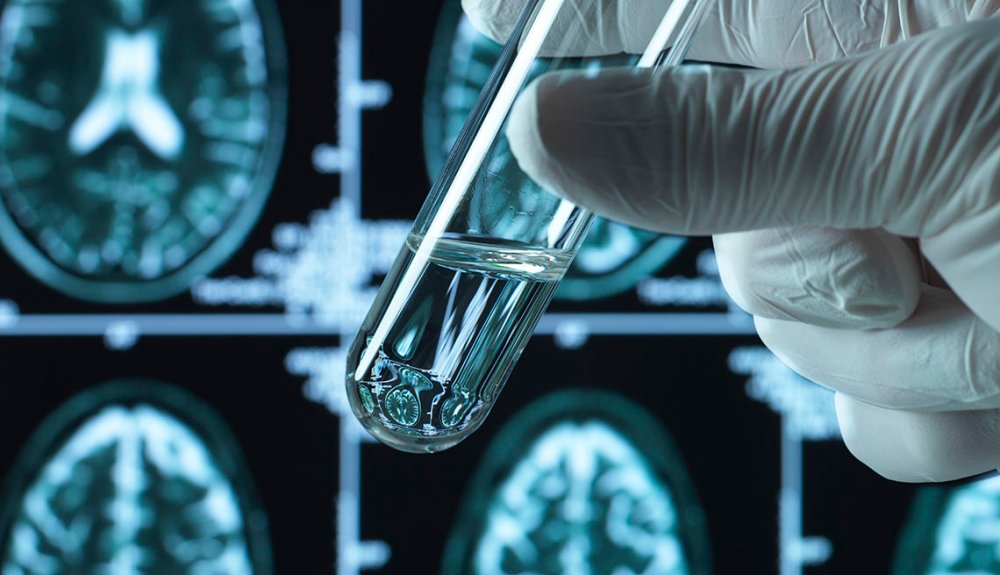
hand holding test tube in front of brain scans

A small team of scientists at the Akassoglou Lab is working on what could be a big breakthrough in treating dementia and other brain diseases. To read full article , click here. 

New Research Center to Tackle Brain Diseases

Katerina Akassoglou will lead the new Gladstone-UCSF Center for Neurovascular Brain Immunology, which brings together a unique combination of expertise to enable novel therapies for Alzheimer Alzheimer’s disease and multiple sclerosis. To read full article, click here. 

Momentum, NMSS Magazine – A big part of the MS puzzle

July 11, 2019

Click here to view article.

Momentum_Interview 2019

Fibrinogen Induces Microglia-Mediated Spine Elimination and Cognitive Impairment in an Alzheimer’s Disease Model, Published in Neuron, Mar 2019

February 5, 2019

Gladstone scientists Katerina Akassoglou and Mario Merlini found that a blood protein destroys memory storage sites in the brain and may lead to new treatments.

Click Here to read full article